
 Built For Strength, Built With Love, New Products Weekly
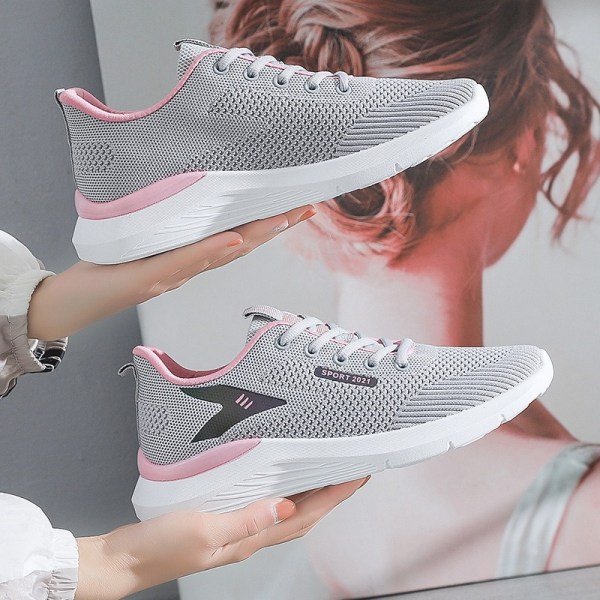 All Active Sneakers
 All Sports Accessories
 Men Active wears
 Socks
Socks Sports Bags
 Sports water bottles
 Sunglasses
 waist packs
 Watches
 Women Active Wears
Why Your Athletic Shoes Are Causing Knee Pain
INTRODUCTION
You have invested in some high-tech athletic shoes to help ypu crush your fitness goal;s , so why you feel pain at your knees after every workout ? Here’s a thought that might surprise you: what if the very shoes you trust to protect you are playing a role in your knee pain? It’s complicated, but some of those fancy features, like excessive cushioning or stability control, might be subtly altering how you move, and in some cases, that could be contributing to joint stress.
The Cushioning Question
When we shop for an athletic shoe, the first thing most of us look for is cushioning. It just makes sense, right? More cushion equals more protection. We’re told it absorbs the shock from all that pounding. And with every step you run, your knees are handling a force equal to three or four times your body weight. A soft, pillowy shoe should fix that.
Well, not always. The research is actually pretty mixed. For some people, especially lighter runners, softer shoes seem to lower injury risk. For others, particularly those with knee arthritis, stable, supportive shoes with thick soles have been shown to reduce pain better than flat, flexible ones.
On the flip side, some studies have found that running in maximalist, highly-cushioned shoes can actually *increase* impact forces and loading rates. The theory is that when your foot senses an overly soft, unstable surface, your body may instinctively stiffen your leg to feel more stable, which can send more force up to the knee. It’s not that cushioning is bad—it’s just not a simple fix. Worn-out shoes that have lost their shock absorption can also be a potential contributor to knee pain.
The Deal with Heel Drop
Now, let’s talk about something you might not have even thought about: the heel-to-toe drop. This is just the height difference between your shoe’s heel and its forefoot, measured in millimeters. For years, traditional running shoes have been built with a high drop, usually around 10 to 12 millimeters.
Here’s why it matters: a higher heel drop can encourage you to land on your heel first. For some runners, this can change the forces acting on the knee. Research has shown that running in shoes with a high drop can increase the knee extension moment and stress on the patellofemoral joint. This has led some to suggest that a lower heel drop might be better for runners who experience knee pain, as it can help shift some of the load away from the knee.
But hold on, it’s not that simple. Switching to a lower drop shoe often shifts that load to your lower leg and Achilles tendon. So, while it might help some people with knee issues, it could create new problems for others. A sudden, drastic change—like going from a 12mm drop to a zero-drop shoe—is often not recommended.
The Arch Support Situation
Finally, let’s get into arch support. If you have flatter feet and your foot rolls inward more than average—a motion called overpronation—it’s easy to see how that could affect your alignment and potentially lead to knee pain. This is why many runners are pointed toward “stability” or “motion control” shoes.
However, the idea of “correcting” pronation is becoming a bit outdated. Some pronation is a completely natural and necessary shock-absorbing movement. In fact, trying to block it with overly rigid shoes might actually be counterproductive for some people. There’s very little evidence that prescribing shoes based on your arch type actually prevents injuries. Some studies have even found that overpronators were slightly *less* likely to get injured in a neutral shoe.
This has led to a newer idea in the running world called the “comfort filter.” The thinking is that the most comfortable shoe for you is probably the one that allows your body to move along its natural, preferred path, which in turn could reduce injury risk. Studies have started to back this up, showing that greater perceived comfort and cushioning are associated with a lower risk of injury.
Conclusion
Your shoes aren’t a magic cure for pain. The wrong pair, no matter the price tag, can be one of many factors contributing to knee pain by messing with your natural movement. By understanding a bit about cushioning, heel drop, and arch support, you can make a more informed choice and find a shoe that truly feels good on your foot.
But remember, shoes are only one part of the puzzle. If your knee pain doesn’t go away, it’s always best to see a medical professional, like a physical therapist, to get a proper diagnosis. They can help figure out if there are other issues at play, like muscle imbalances or problems with your running form.
Social Media
Communication
Bookmarking
Developer
Entertainment
Academic
Finance
Lifestyle
Social Media
Communication
Bookmarking
Developer
Entertainment
Academic
Finance
Lifestyle
